

Start with the tailstock taper
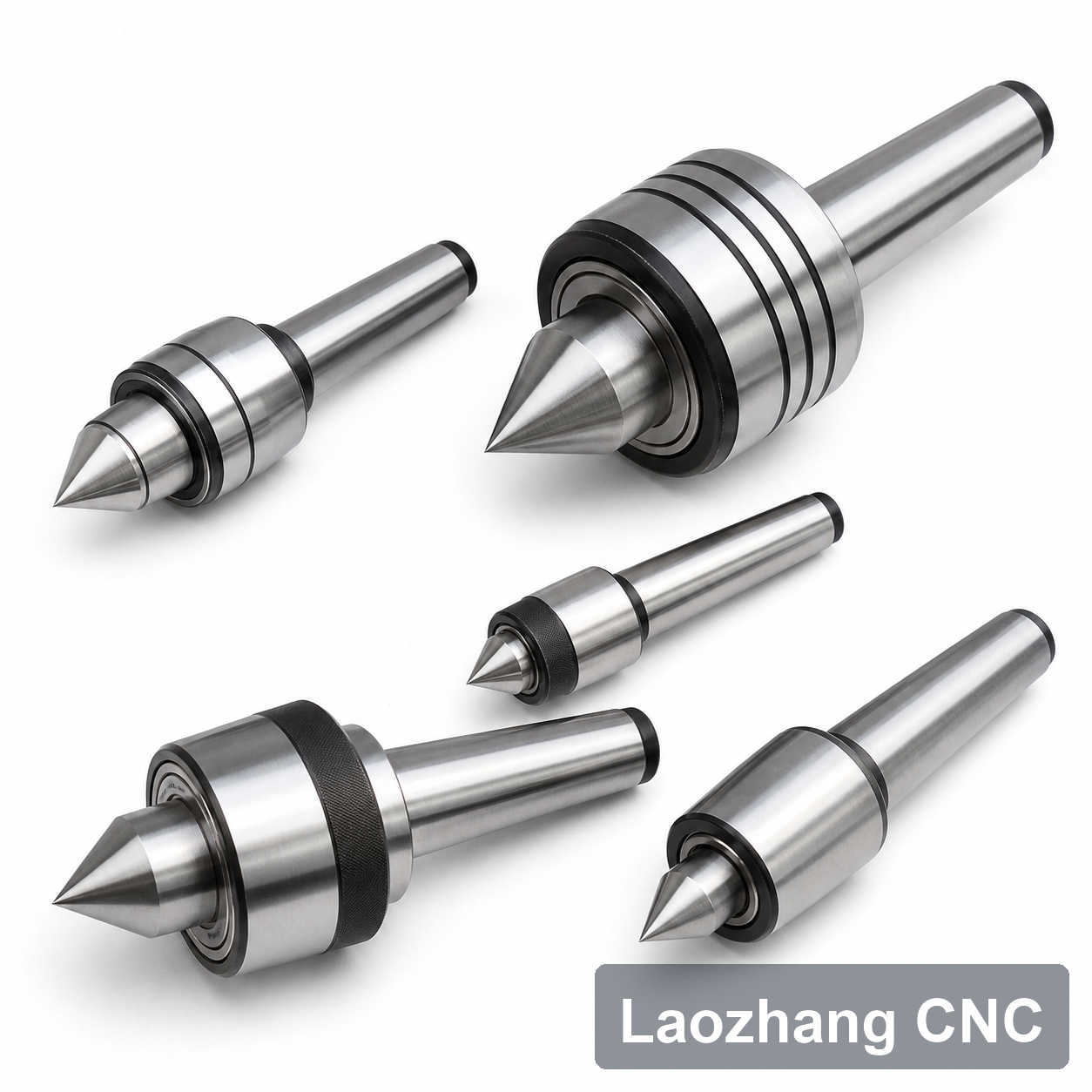
A CNC live center supports a rotating workpiece from the lathe tailstock side. The first detail to confirm is the Morse taper or other machine-side taper. Common requests include MT2, MT3, MT4, MT5, and MT6, but the correct choice depends on the tailstock, not on the buyer's guess. A live center with the wrong taper may look close in a photo but will not fit or seat correctly in the machine.
For distributors, this is the first place where mistakes happen. A customer may ask for a "medium live center" or "lathe revolving center" without giving the taper. ZSCNC recommends asking the end user for the lathe model, tailstock taper, workpiece diameter and weight, turning speed, and point style before ordering. This makes the quotation more accurate and reduces after-sales trouble.
Morse taper is only the starting point. The live center also needs to match load, speed, point shape, bearing structure, and working environment. A small shaft job, a heavy steel roller, and a hollow pipe end should not be treated as the same application.
Match the center to workpiece load and speed
Load and speed decide whether a standard live center is enough or whether a heavy duty type is safer. Light turning work may only need a standard center with a normal point. Heavy turning, long shaft support, interrupted cuts, or larger workpieces may need a stronger body, better bearing support, and a design that can handle more heat and load during operation.
Buyers should also consider whether the center will run for short repair work or long production cycles. A live center used occasionally in a repair shop has different requirements from one used every day in production. If the working condition includes coolant, dust, chips, or high cutting pressure, sealing and bearing protection become more important.
For quotation, avoid a vague description such as "heavy duty live center" without details. Send taper, workpiece weight range, diameter, turning speed, and application. ZSCNC can then suggest a more suitable style and avoid over-quoting or under-specifying the part.
Common live center types
Standard live centers are used for general shaft work and common lathe turning. They are usually the first choice for machine shops that need a practical, affordable support tool. Heavy duty live centers are selected when the workpiece is larger or the cutting condition is more demanding. They are often requested by buyers who serve repair workshops, steel processing, roller machining, or heavy turning users.
Bull nose live centers support hollow workpieces such as pipe and tube ends. The large nose shape contacts a wider area and helps support work that cannot be held well by a sharp point. Carbide tipped live centers are chosen when wear resistance at the point is important. Interchangeable point live center sets are useful for workshops that handle different workpiece shapes and want several tips in one system.
Some buyers also ask for pipe nose centers, extended point centers, high speed live centers, and special live center sets. These should be confirmed by drawing, photo, or detailed specification because similar names can refer to different designs in different markets.
Quality checks before shipment
For a live center, the outside appearance is only part of the story. ZSCNC checks the taper surface, point condition, rotation smoothness, body finish, model marking, and packing before shipment. If the buyer has a specific runout or bearing requirement, it should be stated before quotation so the correct grade can be discussed.
Rotation smoothness matters because the point turns with the workpiece. A rough bearing feel, poor sealing, or damaged point can affect use even if the model number looks right. Taper condition also matters because the center must seat properly in the tailstock. For repeat buyers, keeping the same approved model and packing method helps reduce variation from order to order.
For distributors, packing photos and model labels are useful. Many live centers look similar after they are boxed. Clear labels, separated models, and proper inner protection help the buyer receive the shipment faster and avoid mixing MT3, MT4, MT5, or different point styles.
Price, delivery, and packing for B2B orders
ZSCNC's price advantage is strongest when buyers organize live centers together with related CNC tooling accessories. A mixed order may include live centers, CNC tool holders, ER collets, pull studs, drill chuck arbors, boring heads, machine vises, or other machine accessories. Grouped sourcing helps reduce communication cost and makes carton or pallet planning more efficient.
Delivery depends on model type and quantity. Common taper and standard styles are usually easier to confirm. Heavy duty, bull nose, interchangeable point, or special styles may need more checking. If the buyer has a target delivery date, it is better to mention it early so we can separate stock items from items needing production.
OEM and neutral packing can be discussed for distributor orders. Buyers can provide label artwork, item codes, barcode rules, carton marks, or packing examples. For first orders, we suggest focusing on clear model labels and safe packing before adding complex printed packaging. Once the model list is stable, private label packing becomes easier to repeat.
RFQ checklist for live center buyers
Before sending an inquiry, prepare the following details: Morse taper or machine-side taper, point style, duty level, workpiece weight or diameter, turning speed if known, quantity, packing requirement, and destination country. If the live center must replace an existing model, send a photo, old model number, or drawing.
A good inquiry helps us quote faster and protects the buyer from wrong-fit problems. Instead of asking for "live center price," send the working condition and model list. ZSCNC can then check which items are common, which items need confirmation, and which packing method fits the order.
If your company sells live centers in a local market, start with the most common taper sizes and workpiece applications. Then add heavy duty, bull nose, carbide tipped, and interchangeable point types according to real customer demand. This keeps stock practical and prevents money from being tied up in slow-moving models.