

Many buyers search for pull stud supplier, retention knob manufacturer, BT40 pull stud, CAT40 retention knob, or CNC tool holder pull stud. These searches all point to the same general product group, but the actual model can be very different. A BT40 pull stud for one machine may not be correct for another BT40 machine. A CAT40 retention knob for one brand may have a different angle, gauge length, thread, or coolant hole from another.
This guide is written for distributors, machine shops, maintenance teams and industrial resellers who need to buy pull studs without guessing. It explains the terms, the common standards, the dimensions that matter, and what to send when asking ZSCNC for a quotation.
Pull stud and retention knob mean the same working part
In most CNC tooling conversations, pull stud and retention knob are two names for the same part. It is the threaded knob installed at the rear of a steep taper tool holder. The machine drawbar pulls on this knob and keeps the tool holder seated in the spindle taper.
Some buyers use the name pull stud. Some use retention knob. Some machine manuals use a part number and do not use either name clearly. For quotation, the name matters less than the geometry. The tool holder taper, machine brand, thread, angle, length, coolant style and drawing all matter more than the label.
That is why ZSCNC does not treat this as a generic screw. It is a machine-specific clamping part. The order should be checked before it is packed.
Why the wrong pull stud is a serious problem
A pull stud works under drawbar force. It is pulled into the spindle during cutting, tool change and high speed machining. If the retention knob is too short, too long, the wrong angle, the wrong thread, or the wrong head shape, the drawbar may not grip it correctly.
The first symptom may be poor repeatability. The holder may not seat the same way every time. Cutting may feel less stable. Tool life may drop. The next symptom can be worse: taper swelling, spindle contact problems, broken threads, or damage to the holder and spindle.
Several major tooling suppliers warn buyers not to use the wrong retention knob. That warning is not sales language. It is practical machine safety. Pull studs are inexpensive compared with a spindle repair, but the wrong pull stud can be an expensive mistake.
BT, CAT, DIN, JIS, MAS and ANSI are not interchangeable words
One common mistake is treating BT40 or CAT40 as the full pull stud specification. It is not enough.
BT holders commonly use metric threads and may follow JIS, MAS or machine-specific forms. CAT holders commonly use inch threads and ANSI style retention knobs, but CAT machine requirements can still vary by manufacturer. DIN and ISO styles have their own dimensions. MAS style, JIS style and ANSI style are not just different names printed in a catalog.
The safest way to quote is to confirm the machine, holder taper, thread, angle and drawing. If the buyer has the old pull stud, a clear photo helps. If the buyer has the machine manual, the pull stud drawing or part number is better. If the buyer only sends "BT40 pull stud", the supplier can quote a common model, but it may not be the correct one for the machine.
The dimensions that matter
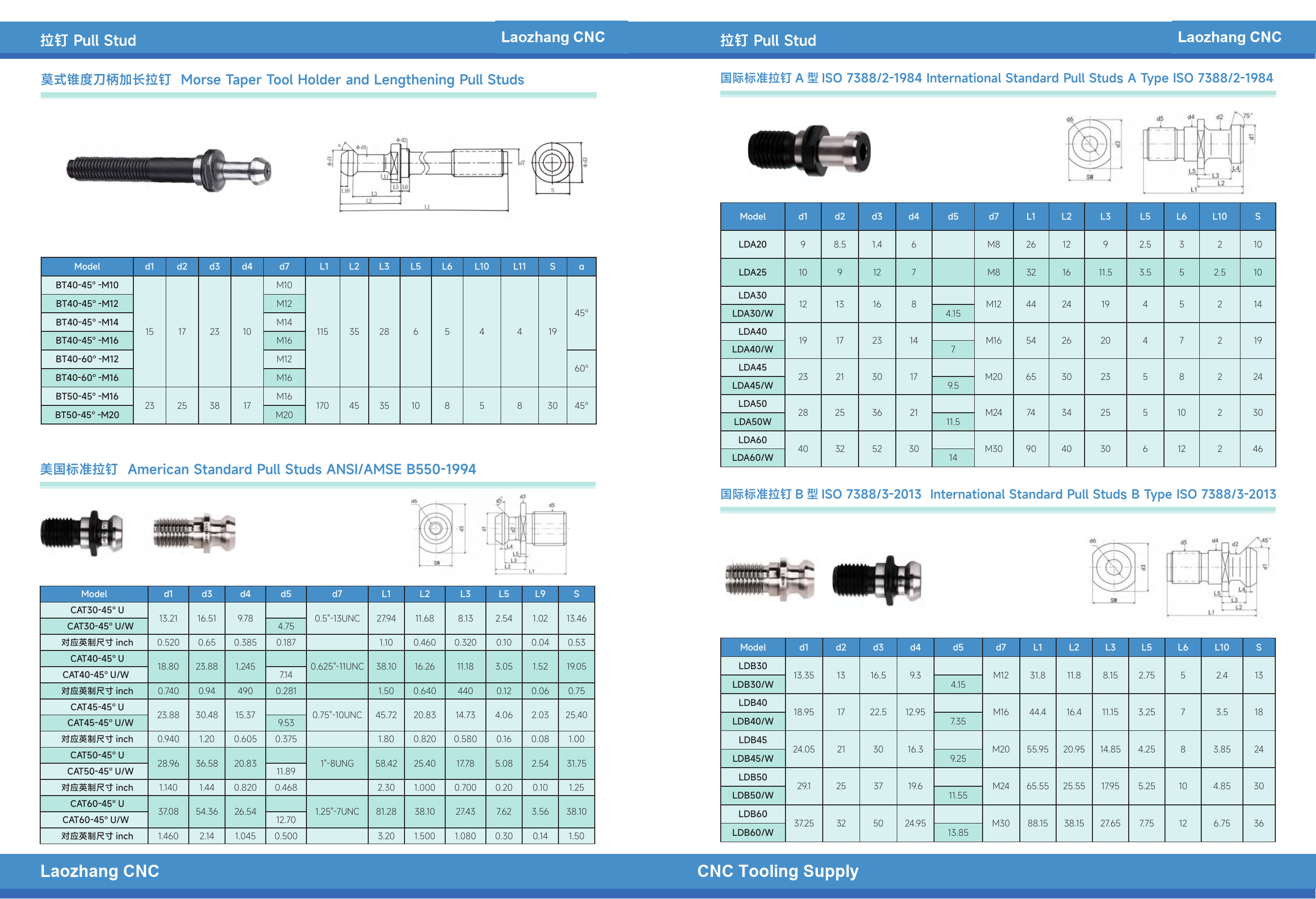
A pull stud quotation should not be based only on the taper name. The important dimensions usually include:
- tool holder taper, such as BT30, BT40, BT50, CAT40 or CAT50
- thread size and pitch
- knob angle, such as 45 degree, 60 degree, 75 degree or another machine-specific angle
- overall length
- gauge length or shoulder position
- head diameter and under-head shape
- wrench size or tightening feature
- coolant hole, sealed type or O-ring requirement
If the buyer can send a drawing, the quotation becomes much safer. If there is no drawing, ZSCNC can work from an old sample photo and machine information, but final confirmation is still important.
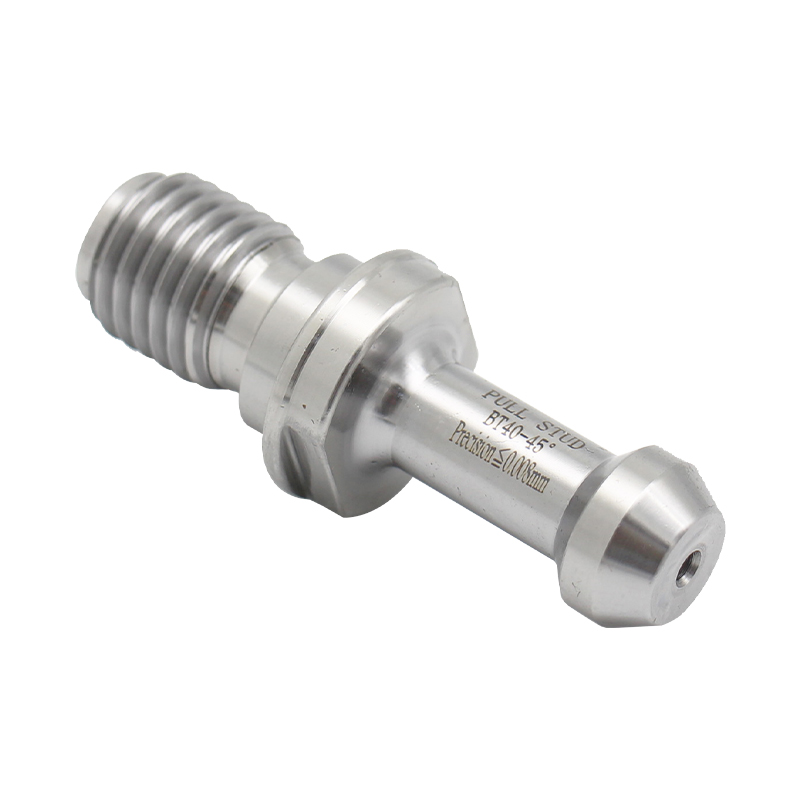
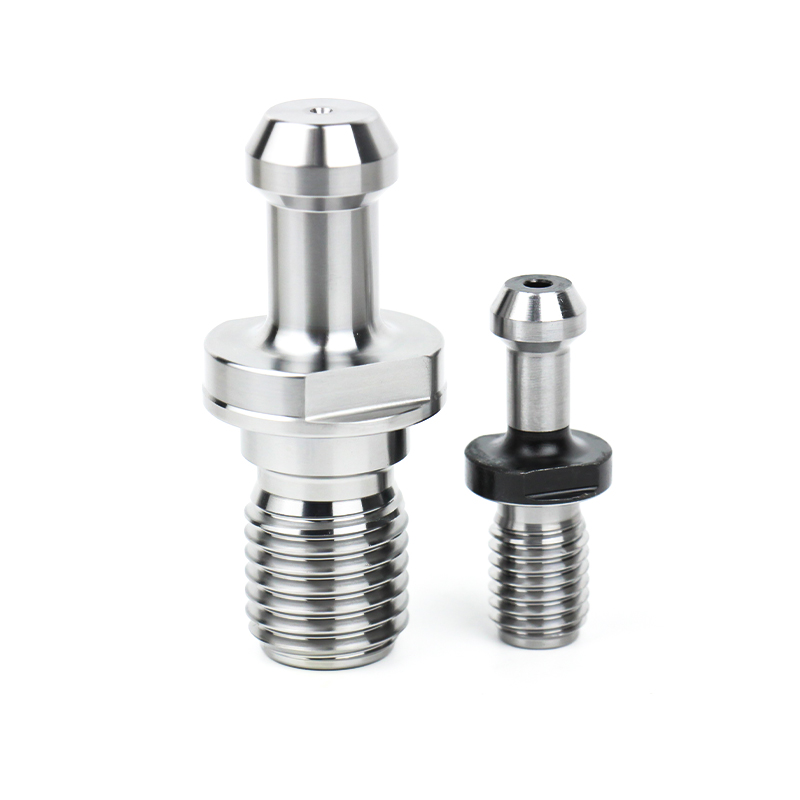
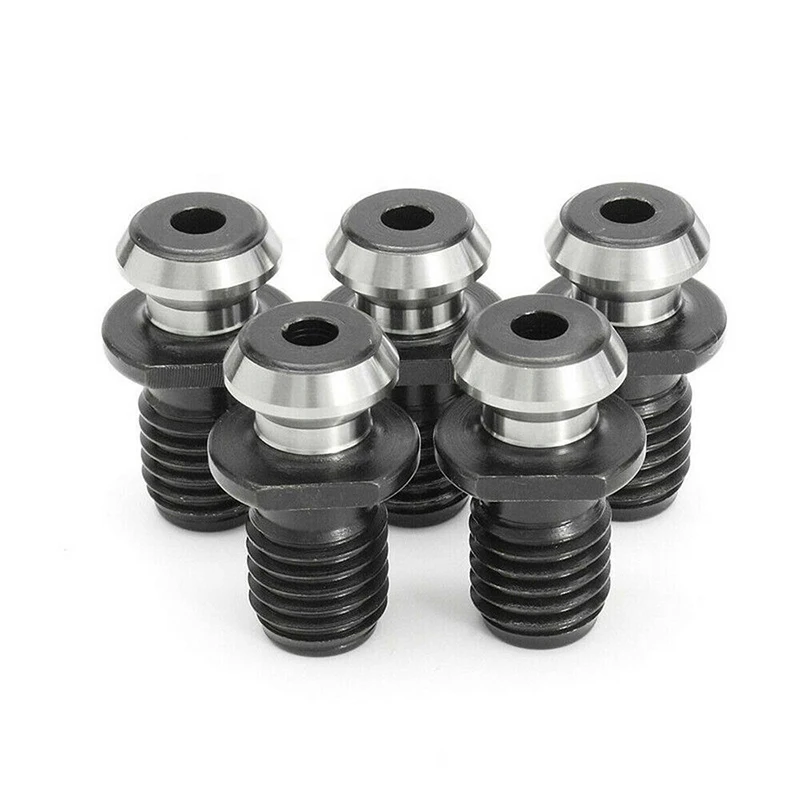
BT pull studs
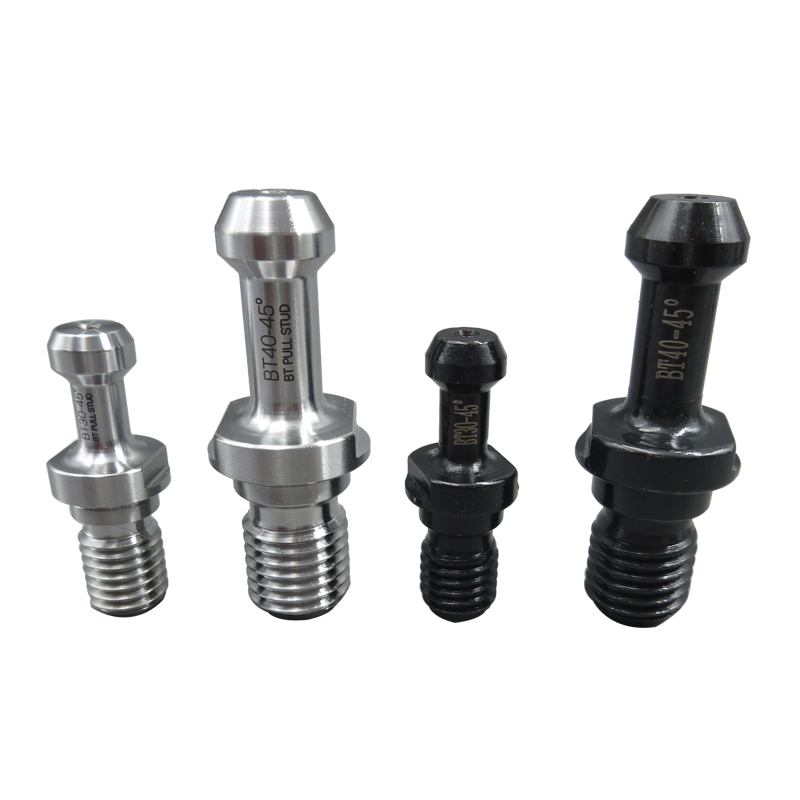
BT pull studs are common on machining centers using BT tool holders. Common RFQs include BT30, BT40 and BT50 pull studs. Buyers may ask for MAS403, JIS style, coolant-through style, sealed style or machine-specific styles.
For BT systems, metric thread is common, but that does not mean all BT pull studs are the same. The angle, length and coolant structure still need checking.
If you are a distributor, do not list only "BT40 pull stud" in your purchase request. Add the machine brand, old model number, thread and whether coolant-through is required. That prevents a small, avoidable error from becoming a customer complaint later.
CAT retention knobs
CAT retention knobs are common with CAT40 and CAT50 tool holders. Buyers often search for CAT40 retention knob, CAT50 pull stud, ANSI retention knob, Haas style, Mazak style or other machine-related names.
CAT systems often use inch threads, but again, thread alone is not enough. The knob angle, gauge length and machine brand still matter. A CAT40 45 degree retention knob and another CAT40 retention knob may look similar in a small photo, but they may not be the same part.
For CAT orders, ZSCNC recommends that buyers send the machine brand and the old knob photo. If the old knob has a number or marking, include it in the inquiry.
Coolant-through, sealed and O-ring pull studs
Some machines use through-spindle coolant. In that case, the pull stud may need a coolant hole, sealing face, O-ring or special structure. A non-coolant pull stud may not be acceptable.
Coolant-through pull studs should be checked carefully because the hole, sealing area and surface condition affect coolant flow and leakage. The wrong style can create leaks, poor coolant delivery or unnecessary machine downtime.
When sending an RFQ, tell us whether the machine uses through-spindle coolant. If the old pull stud has an O-ring or a coolant hole, send close photos from the side and from the end.
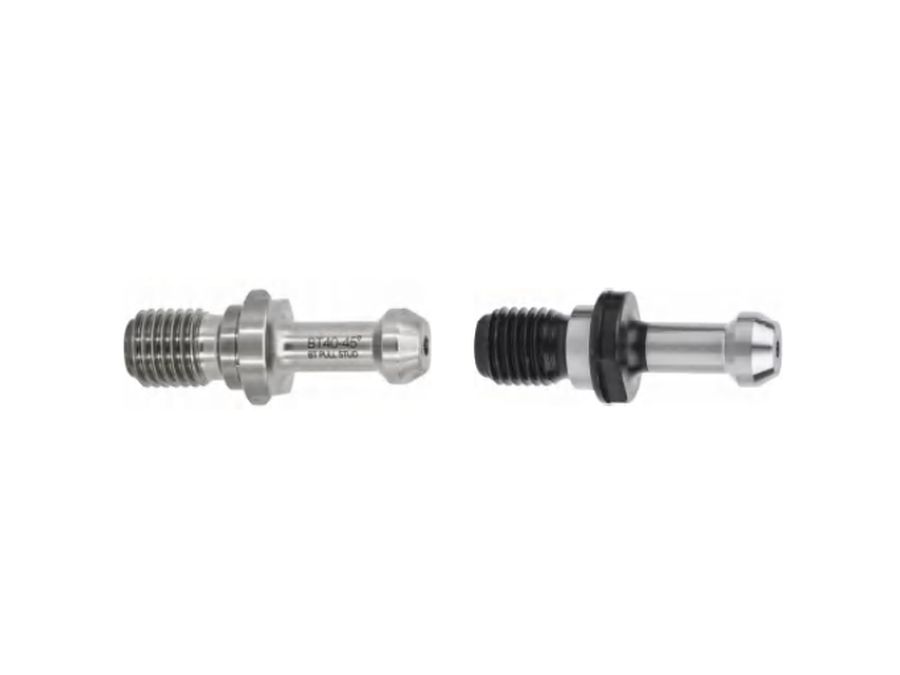
Material, heat treatment and thread quality
A pull stud must handle repeated drawbar force. Buyers should care about steel grade, heat treatment, thread quality, surface finish and consistency between pieces.
For many B2B orders, the buyer does not need a luxury brand. The buyer needs the right model, stable material, clean thread, correct geometry and reliable packing. That is where ZSCNC focuses: practical matching, clean separation by model, and clear checks before export.
For high speed or heavy cutting applications, buyers should be even more careful. A worn or low-quality retention knob can affect tool holding contact and machining stability. Replacing worn pull studs is often much cheaper than chasing accuracy problems through the whole tool holder system.
Installation torque matters
Pull studs should be installed properly. A pull stud that is over-tightened, under-tightened, tightened with impact, or installed with damaged threads can cause problems. Several tooling manufacturers recommend using the correct torque method rather than hammering a wrench or guessing by feel.
ZSCNC can supply the part, but installation belongs to the machine user. Buyers should follow the machine and holder manufacturer's recommendation for torque, thread condition and maintenance practice.
For distributors, this is also useful sales information. Reminding customers to install the correct pull stud correctly can reduce after-sales trouble.
When should pull studs be replaced?
Pull studs are spare parts. They are not meant to be ignored forever. Replacement may be needed when the knob is worn, thread is damaged, the contact surface is marked, coolant sealing fails, or a holder is moved to another machine system.
Many shops replace pull studs when buying new holders, changing machines, standardizing tooling, or solving retention and repeatability problems. Distributors can keep common BT40, BT50, CAT40 and CAT50 models in stock for this reason.
For regular users, it is worth checking old pull studs during holder maintenance. A cheap part should not be allowed to create an expensive machine problem.
Price advantage for mixed orders
Pull studs are often purchased with CNC tool holders, ER collets, nuts, spanners, drill chuck arbors, tapping tools, boring heads and other machine tool accessories.
If a buyer purchases pull studs alone from one source, holders from another source and ER accessories from a third source, communication and packing become inefficient. For distributors, that also makes receiving and stocking slower.
ZSCNC can quote pull studs together with the rest of the tooling list. This helps buyers compare the total purchasing cost, not only the unit price of one small part. It also reduces repeated shipping, repeated packing and repeated model confirmation.
Delivery advantage depends on model clarity
Fast delivery starts with a clear model. A vague RFQ such as "BT40 pull stud, 500 pieces" still needs clarification. A clear RFQ such as "BT40 MAS style, M16 thread, coolant-through, 45 degree, for this machine brand, 500 pieces, neutral carton" can move much faster.
For common models, ZSCNC can check availability and quotation quickly. For mixed standards or OEM packing, we confirm the model list, labeling and packing before payment. That prevents a shipment from being delayed by avoidable questions.
Repeat orders can be faster. Once the buyer and ZSCNC agree on the model list and packing rules, the next order can follow the same record.
Quality checks before shipment
For pull studs, ZSCNC focuses on practical checks that matter to B2B buyers:
- model and standard
- thread size and visible thread condition
- angle and shape against confirmed model
- coolant hole or sealed type
- surface finish and visible damage
- quantity by model
- separation of BT, CAT and other standards
- carton labels, model stickers and OEM packing notes
Mixed orders need special care. If BT40, BT50, CAT40 and CAT50 pull studs are packed together without clear labels, the buyer has to sort everything again. Clear packing saves time after the shipment arrives.
OEM packing for pull studs
Pull studs are small, so packing seems simple. For distributors, it is not that simple. A small part without a label can be hard to identify later, especially when several standards are similar in appearance.
ZSCNC can discuss neutral bags, model stickers, small boxes, carton labels, barcode labels and OEM packing. The goal is not only appearance. Good packing helps the buyer's warehouse receive, store and resell the goods with fewer mistakes.
If you have a brand label, barcode rule or carton mark requirement, send it before quotation. It affects packing work and should be included early.
What to send for a pull stud RFQ
To quote pull studs correctly, send as much of the following information as possible:
- tool holder taper, such as BT30, BT40, BT50, CAT40 or CAT50
- machine brand and model if known
- standard, such as MAS, JIS, DIN, ANSI or ISO
- thread size and pitch
- knob angle
- overall length or drawing
- coolant-through, sealed or normal type
- old pull stud photo if available
- quantity by model
- neutral packing or OEM packing requirement
- other tools to ship together, such as holders, collets or spanners
If you do not know the standard, send the old part photo and machine information. ZSCNC can help narrow down the model before quoting.
Why buyers use ZSCNC for pull studs
ZSCNC is useful for buyers who need pull studs as part of a larger CNC tooling order. We are not only selling one small part. We help overseas buyers organize the full accessory list: CNC tool holders, ER collets, pull studs, nuts, spanners, drill chuck arbors, tapping tools, boring heads and machine tool accessories.
Our advantage is practical: model matching, combined sourcing, reasonable pricing, delivery planning, quality checks and export packing. For distributors and machine shops, that saves communication time and reduces the chance of receiving mixed or unclear parts.
Send your pull stud model list, photos, drawing, machine brand, quantity and packing request to ZSCNC. We will confirm the model direction first, then prepare the quotation.