

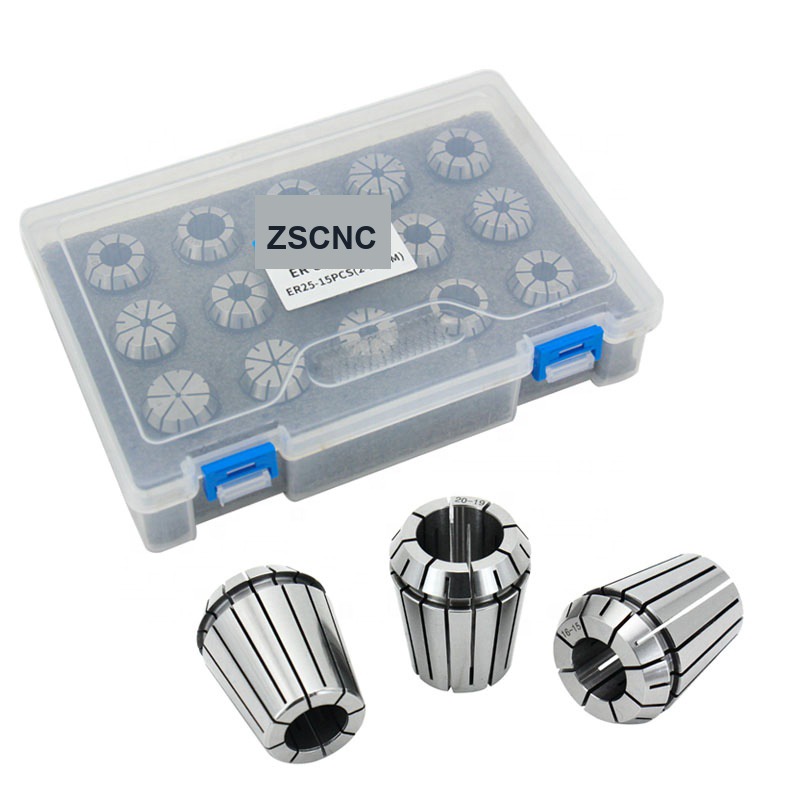
ER collets are small parts with big influence
ER collets are used every day in CNC milling, drilling, engraving, tapping, and general tool clamping. They look simple, but a poor collet can create runout, uneven clamping, tool slip, surface finish problems, and shorter tool life. For distributors and machine shops, an ER collet order should not be treated as a simple size list only.
Most inquiries start with ER11, ER16, ER20, ER25, ER32, ER40, or ER50. The buyer then needs to confirm size range, quantity, accuracy expectation, material preference, packing style, and whether the order is for individual pieces, metric sets, inch sets, or replenishment stock. ZSCNC checks these details before quotation so the buyer can compare price on the right product level.
Our advantage is practical B2B supply. We help buyers organize common stock sizes, match ER nuts and spanners when needed, control packing, and keep repeat orders consistent. This is more useful than quoting one low price without confirming how the collets will actually be sold or used.
Confirm the ER series and clamping size
The ER series decides the outside geometry and matching nut or holder system. ER32 collets do not replace ER40 collets, and ER20 collets do not fit an ER25 nut. The clamping size is also important. A buyer should send each size clearly, such as ER32-6, ER32-10, ER40-16, or a full ER32 set with a stated size range.
ER collets have a clamping range, but buyers should not rely on the full range without thinking about accuracy and gripping force. When the tool shank size is known, it is usually better to select the matching nominal collet size. For example, a 10 mm shank should normally use the correct 10 mm collet rather than forcing a nearby size to cover it. This improves clamping stability and makes the result easier to control.
For distributors, common sizes should be separated from slow-moving sizes. ER32 and ER40 are often requested in larger quantities because they are widely used in machining centers. Smaller ER11 or ER16 sizes may be common for engraving, small machines, or compact tool holding. A good stock program should follow local machine demand, not only a catalog list.
Runout inspection and accuracy expectation
Runout is one of the first things professional buyers ask about. In real machining, runout is affected by the collet, nut, holder, tool shank, spindle condition, cleaning, and measurement method. This means a collet's accuracy should be discussed together with how it will be used and tested.
For general machining, buyers may choose standard commercial accuracy. For finishing, small-diameter tools, engraving, mold work, or higher speed cutting, a tighter runout option may be needed. A useful RFQ should state whether standard or precision grade is required. If the buyer has a target runout value or testing method, it should be provided before quotation.
ZSCNC checks model, size, surface condition, slot condition, marking, and packing before shipment. For precision orders, buyers can request inspection photos or additional confirmation. We avoid making broad promises without knowing the holder, nut, and test setup, because the final runout at the cutting tool is a system result.
Clean collets, nuts, and holders matter
Even a good ER collet can perform poorly if chips, oil sludge, rust, or burrs are trapped in the holder bore, nut, or collet slots. Buyers should remind end users to clean the collet, nut, tool shank, and holder taper before testing runout. Dirt between the parts can create false runout and lead the user to blame the collet when the problem is actually assembly condition.
Correct tightening also matters. The collet should be snapped into the nut correctly before the tool is inserted. If the collet is not seated in the nut, clamping may be uneven. The tool shank should have enough insertion length, and the nut should be tightened with the proper wrench. These workshop habits affect customer satisfaction after sale.
For distributors, this is useful after-sales knowledge. A short instruction note, correct size label, and clean packing can reduce complaints. If buyers need OEM packing, ZSCNC can discuss labels or packaging that make model selection and handling easier for the end user.
Common stock sizes and set planning
Common ER stock depends on the local market. Many buyers start with ER16, ER20, ER25, ER32, and ER40. For general distribution, ER32 and ER40 often need deeper stock because they are used widely in milling and machining center work. ER11 and ER16 are useful for smaller tools, engraving, and compact holders. ER50 may be requested where larger clamping capacity is needed.
Buyers can order individual sizes, metric sets, inch sets, or mixed replenishment lists. Sets are useful for new customers who want a complete range. Individual sizes are better for repeat orders where certain sizes sell faster. For example, a distributor may sell many ER32-6, ER32-8, ER32-10, and ER32-12 pieces but fewer very small or very large sizes. ZSCNC can help separate high-turnover sizes from slower items.
If the order includes ER nuts, spanners, CNC tool holders, or pull studs, include them in the same inquiry. Matching accessories can improve sales and reduce the chance that the buyer receives collets without the holders or nuts needed for local demand.
Price, delivery, and OEM packing
ZSCNC's price advantage comes from practical order grouping and stable product planning. A buyer who sends a clear ER collet list can usually receive a clearer quotation than a buyer who only asks for "ER collet price." Quantity, size range, accuracy level, and packing all affect cost. By separating standard stock from precision or special requirements, buyers can choose the right price level for their market.
Delivery is faster when the order uses common sizes and confirmed packing. For urgent orders, buyers should tell us which sizes are most important. For repeat orders, keeping a standard size list and label format helps us prepare faster. If a buyer needs private label packing, set boxes, individual sleeves, barcode labels, or carton marks, those requirements should be confirmed before packing.
For first cooperation, we suggest keeping the order practical: confirm ER series, size range, quantity, accuracy, and packing. After the first shipment is received smoothly, the buyer can expand to branded boxes, full sets, or broader CNC tooling accessory packages. This gives the buyer a controlled way to test quality, price, delivery, and local market demand.
RFQ checklist for ER collet buyers
To get a fast and accurate quotation, send ER series, size list, quantity per size, required accuracy level, material or finish requirement if any, packing style, destination country, and target delivery time. If you need sets, mention the size range and whether the set should be metric or inch. If you need OEM packing, send label artwork, box style, barcode rules, or photos of your current packing.
ZSCNC can review the list and confirm which items are common stock, which items need production, and which accessories should be added. This helps overseas buyers build a more complete ER collet program instead of buying scattered sizes without a repeat plan.